2026 Energy Hackathon Challenge Set Winner
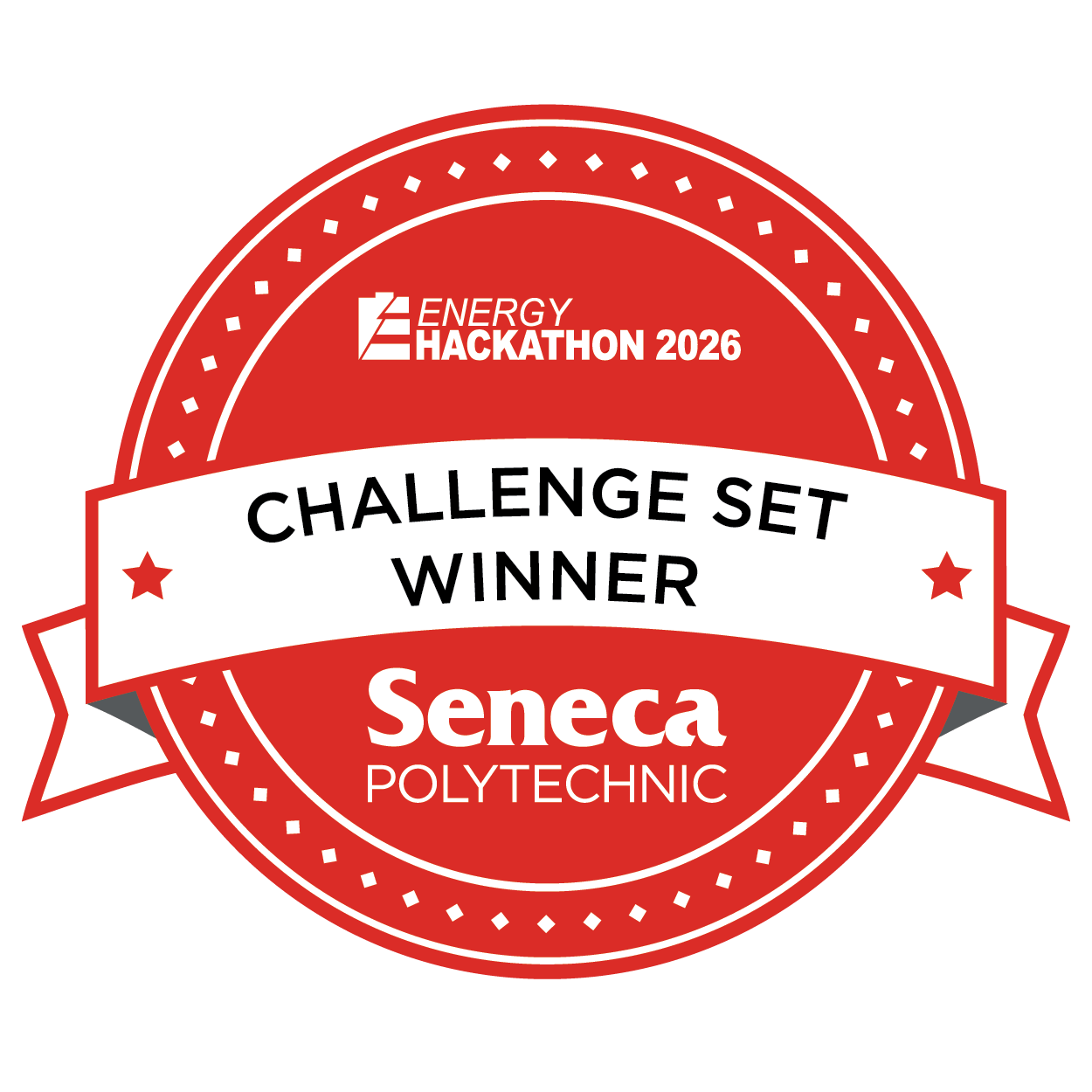
Badge awarded to
Ellen Lapteva
This badge will be awarded to Challenge Set Winners of Energy Hackathon 2026 whose team developed the top solution within a specific challenge theme. Team members demonstrated innovation, collaboration, and problem-solving skills while successfully meeting the challenge objectives and judging criteria.
Issued on 24 Jun 2026 by

Seneca Polytechnic
Issuer
Seneca Polytechnic
info@senecapolytechnic.ca
Seneca Polytechnic is a multiple-campus public college located in the Greater Toronto Area of Ontario, Canada. It offers full-time and part-time programs at the baccalaureate, diploma, certificate and graduate levels.
Criteria
The recipient of this badge has demonstrated the ability to:
- Demonstrate a deep understanding of the assigned challenge set by analyzing stakeholder needs, constraints, and real-world problem context within a specific theme.
- Define a clear and focused solution aligned with the challenge objectives and identify key functional and non-functional requirements for the proposed idea.
- Develop a high-quality, functional, and well-structured solution that effectively addresses the challenge requirements within the assigned theme.
- Apply appropriate system design, modeling techniques, and development practices to ensure the solution is logical, scalable, and user-centered.
- Demonstrate strong collaboration within the team, ensuring effective task distribution, communication, and integration of individual contributions into a cohesive solution.
- Deliver a compelling and well-structured solution that stands out within a specific challenge set based on innovation, feasibility, impact, and execution quality.
- Effectively communicate the solution to judges and stakeholders, clearly explaining the problem, approach, design decisions, and expected impact.
- Adhere to professional, ethical, and hackathon guidelines, including proper use of tools, attribution of resources, and compliance with event rules.
By providing evidence of the following:
- A final pitch presentation (typically 10 minutes) demonstrating the solution, its alignment to the challenge set, design choices, and overall impact.
- A working prototype, proof of concept, or detailed mock-up that clearly demonstrates the functionality and value of the solution.
- Use of a version control system (such as GitHub) showing active collaboration, commits, and structured project development throughout the hackathon.
- Clear documentation of system design artifacts such as wireframes, architecture diagrams, process flows, or data models.
- Evidence of team collaboration and task coordination, including project boards, sprint planning artifacts, or communication logs.
- Submission of a complete challenge set solution that meets all defined requirements before the official deadline.
- Demonstration of innovation and alignment with challenge goals through supporting materials such as demo videos, use case stories, or impact analysis.
- Active engagement with mentors, organizers, or judges during mentorship and iteration cycles.