Skin Health Provider
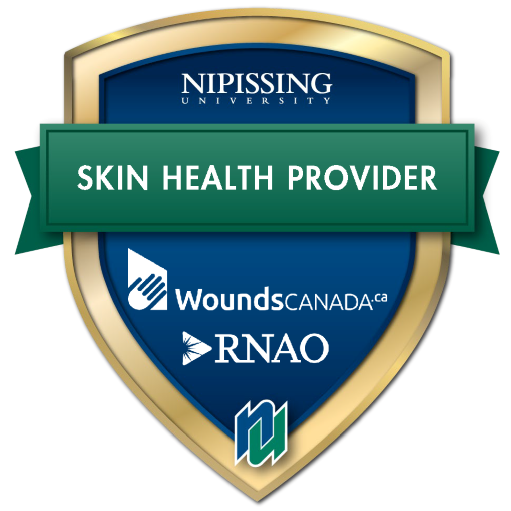
Badge awarded to
Nicole Crawford
Issued on 16 Jan 2026 by

Nipissing University
Issuer
Nipissing University
extendedlearning@nipissingu.ca
Nipissing is proud to be a primarily undergraduate university with a reputation for excellence in teacher education, arts, science, professional programs and nursing. Nipissing is committed to making an impact and playing a positive role in the educational, social, cultural and economic life in the communities it serves.
Criteria
Type of Recognition
Completion-Based Certificate
Learning Objectives
Upon completion of this micro-credential, learners will be able to:
- Describe their role in promoting skin health to individuals they are caring for
- Identify the components necessary to keep self and the persons they are caring for safe from infection and other hazards
- Describe skin and its purposes
- Describe why protecting skin is important
- Identify the most common types of skin damage
- Name the common causes and risk factors for different types of skin damage
- Identify the individuals who may be at risk of skin damage
- Complete the cycle of care: assess—inform—receive guidance—provide care for the prevention and management of common types of skin breakdown
- Identify which circumstances need to be reported as usual and which are emergencies (red flags).
Course Content
- Module 1: About the Program
- Describe the components of the Skin Health Program for Personal Care Providers.
- Locate resources to support your learning and practice.
- State the overall objectives for the Skin Health Program for Personal Care Providers.
- Module 2: Role as Care Provider
- Describe your role in promoting skin health to individuals you are caring for.
- Module 3: The Personal Care Visit
- Identify the components necessary to keep you and the person you are caring for safe from infection and other hazards.
- Module 4: Healthy Skin
- Describe skin and its purpose.
- Module 5: Caring for Skin
- Describe why protecting skin is important.
- Module 6: Damaged Skin
- Identify the most common types of skin damage.
- Module 7: Skin Tears
- Name the common causes and risk factors for different types of skin damage-skin tears.
- Identify the individuals who may be at risk of developing skin tears.
- Complete the cycle of care for the prevention of and management of skin tears.
- Identify which circumstances need to be reported as usual and which are emergencies (red flags).
- Module 8: Pressure Injuries
- Name the common causes and risk factors for pressure injuries.
- Identify the individuals who may be at risk of developing a pressure injury.
- Complete the cycle of care for the prevention of and management of pressure injuries.
- Identify which circumstances need to be reported as usual and which are emergencies (red flags).
- Module 9: Moisture-associated skin damage (MASD)
- Name the common causes and risk factors for MASD.
- Identify the individuals who may be at risk of developing MASD.
- Complete the cycle of care for the prevention and management of MASD.
- Identify which circumstances need to be reported as usual and which are emergencies (red flags).
- Module 10: Foot and Leg wounds
- Name the common causes and risk factors for foot and leg wounds.
- Identify the individuals who may be at risk of developing a foot or leg wound.
- Complete the cycle of care for the prevention of and management of skin breakdown.
- Identify which circumstances need to be reported as usual and which are emergencies (red flags).
- Module 11: Thermal Wounds
- Name the common causes and risk factors for thermal skin injuries.
- Identify the individuals who may be at risk of thermal skin injuries.
- Complete the cycle of care for the prevention of and management of thermal injuries.
- Identify which circumstances need to be reported as usual and which are emergencies (red flags).
- Webinar
- Discuss how you have been able, or unable, to implement your learning from this program into the care you provide.
- Identify strategies you are using to improve the skin health of those you provide care for.
- Describe how to notify the health team about your concerns when you notice a change in the skin health of those you provide care for.
- Demonstrate application of best practice and good judgement in relation to the case study.
- Discussion Forum
- Identify individual learning objectives.
- Discuss work environment enablers and barriers.
Learning Experience, Activities
Learners must complete all 11 modules and score 80% on all knowledge check questions. Learners may repeat modules and knowledge check questions until they achieve a satisfactory grade.
In addition to the online modules, webinar, and required readings, learners are required to interact with each other and faculty in the online asynchronous discussion forum. In this virtual learning community, learners will be provided the opportunity to engage in dialogue with fellow learners about course content and associated applications and implications for the practice of wound care by unregulated professionals.
Assessment
This is a Completion-Based Certificate.
Learners are required to complete a pre- and post-survey questionnaire; final exam with a pass of 80% or greater and a course evaluation for successful program completion. The pre-test and post-survey are recommended, but not required for completion.
Notional Learning Hours
10 - 12 hours