Trauma-Informed Practice
Badge awarded to
Katherine Pike
Issued on 29 Oct 2026 by

Nova Scotia Career Development Association
Issuer
Nova Scotia Career Development Association
training@nscda.ca
NSCDA: on the cutting edge of best practices, innovation, industry standards and professional certification for career development professionals.
Criteria
Type of recognition
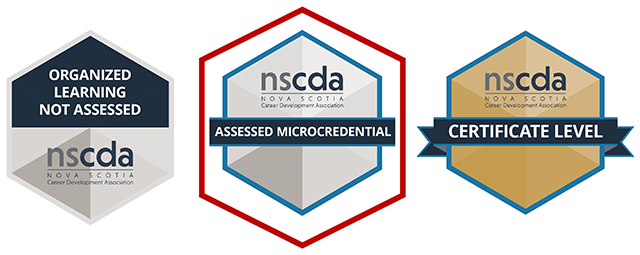
Assessed microcredential
Learning Objectives/Outcomes
- Understand trauma, including systemic and intergenerational trauma.
- Use more inclusive and decolonizing language in career conversations.
- Recognize how power, privilege, and systems can influence people’s experiences.
- Understand how the nervous system and emotional regulation can affect career and employment experiences.
- Shift from focusing on individual deficits to recognizing strengths, relationships, and community resources.
- Apply practical approaches for anti-oppressive, culturally responsive, and trauma-informed career conversations.
Learning Content
The five modules provide a solid grounding in trauma-informed practice including:
- Understanding trauma, signs and signals;
- Regulation and co-regulation, intake conversations, boundaries, the 7Fs of the Autonomic Nervous System;
- Trauma-informed strategies, rest, navigating power and privilege;
- Community resources, impact networks, Communities of Practice;
- Applying trauma-informed practices to personal well-being, how to be a trauma-informed organization.
Assessment
Earners must successfully complete the knowledge checks embedded throughout each of the five modules to demonstrate their understanding as they progress through the material. A comprehensive multiple-choice assessment concludes each module; earners must achieve a minimum of 80% on each assessment.
Estimated learning effort
5 hours

Alignments
The National Competency Profile for Career Development Professionals
https://cdpc-cedc.ca/our-profession/national-competency-profile/
The National Competency Profile for Career Development Professionals (National Profile) is a curation of competencies from the Competency Framework that details and describes effective performance, knowledge, understanding, and abilities for ALL Career Development Professionals regardless of role/setting.